When your brand is shit, what do you do? Make a sophomoric joke? Apparently, the K-Mart marketing department was willing to try anything and went along with an agency idea that, while well executed, and amazingly went viral, was a bad idea. But, if you read the trade press, it was a great campaign:
How could a “best of the year” rundown be complete in 2013 without Kmart’s “Ship My Pants”? DraftFCB made brilliant use of sophomoric humor to create one of the year’s biggest cultural moments from the ad world, which comes in at No. 9 in the TV/film category. It all began with “Ship My Pants,” although the gag later extended to “Big Gas Savings” and “Ship My Trousers,” too.
No, customers generally don’t think shit is funny when it comes to where they spend their money- unless, you run a comedy club. Or run a commercial where you never say the word and do it elegantly like Frank’s Red Hot Sauce.
A local middle Eastern themed QSR, “Shish Wraps” try’s the same gimmick- “Shish Happens,” “Don’t let Shish Happen to you on this Friday the 13th,” and “Get your shish together and stop in today for $5.00 wrap or bowl” the message is shit- especially when the shop is tragically empty and they have a special selling all wraps for $5 in a high rent location.
While humor, irony and exaggeration are all perfectly acceptable foundations for great advertising, the most critical, fundamental piece of the package is a strong brand to begin with, and K-mart hasn’t had that for years. Our local restaurant- never even had the chance to get there. Shit may be funny, but, it’s not a good place to take your brand.
McDonald’s brand managers are fanatical about protecting the brand and the image. No birds ever appear in a McD’s commercial- “rats with wings” as one campaign concept was shot down to a friend in the business. McDonald’s knows its brand is built on family friendly wholesome happy times. K-mart’s marketing is now built on a pun? Not happening.
Brands that understand their brand equity and work to build it, know that being funny is great- but, always where your brand isn’t the butt of the jokes. It’s time K-mart rediscovered the blue light special, and figured out why dollar stores are beating them at the game they created. As to Shish Wraps, it’s a little harder than just taking the shish out- we’d recommend adding a Gyro to your menu, since people already know what that is, and focus on the healthy Mediterranean diet as an alternative to burgers and pizza. “Welcome to healthy” anyone?
When it comes to branding, naming your company after your location isn’t a great idea. We watched a hair salon move four times from it’s original eponymous address 23 Second Street and the local grocery chain, Dorothy Lane Market doesn’t have a single location on Dorothy Lane.
Of course, that’s just in the name, but what about your audience? A local company makes tarps and tents. They’ve been doing it since 1948, and only see two markets, farmers and local tent rental. The only advertising they do is in a farm equipment guide. Are they self-limiting their brand and their sales? Of course. Every roll-off construction dumpster needs a tarp to cover the debris as they haul it to the dump, yet, despite making the same product to cover grain trucks, the demolition and waste hauling markets are ignored.
Sometimes companies get confused about what they really sell. Department stores used to be a convenience, in that all the things you need for your household are in one place. That was great until malls came around and did the same thing, only the specialty shops within the mall often offered more focused service, and a better branding experience. The reason for a department stores existence stopped once every single department was duplicated in the mall- at least to younger shoppers. Sears was the sole exception, having built strong brands in Craftsman, Die Hard and Kenmore, while the rest depended on other peoples brands to carry them.
Amazon is what it is today, because Jeff Bezos specifically didn’t call it Amazon Books, but just Amazon. Don’t limit your brand by making it synonymous with your first product, and don’t think any company only has, or will have just one market, because limiting your vision will limit your ability to grow in the future.
There is a difference between selling Apple products and clothes. Ron Johnson, formerly Apple’s retail chief and the new CEO of JC Penney is finding that out quickly. Critics of his move from constant sales to an always fair pricing strategy are having a field day with a Forbes article calling it an “Epic Rebranding Fail”
But nevertheless they launched “Fair and Square Pricing” whereby promotions and sales would be a thing of the past, for the most part, and in their stead would be everyday prices, “best prices” which would be available to consumers on the first and third Friday of each month, plus they would mix in some month-long values, too.
The new tagline ”Enough. Is. Enough.” would speak to the belief that consumers were inundated with promos, coupons and sales and what they really wanted was just plain, old-fashioned, everyday low prices.
It’s easy to armchair quarterback these bold moves, many (including this author) thought when Apple decided to open bricks and mortar stores it was a move in the wrong direction. Gateway had failed miserably doing the same thing- and yet, Apple is now considered the most profitable retailer on the planet.
However, there is a big difference between JC Penney and Apple- JC Penney is more of a curator of retail while Apple is the owner of the product. Yes, I can get Apple products elsewhere, but at an Apple store I’m dealing direct. At JC Penney, I can get the products elsewhere and anywhere- there is no exclusivity to what JC Penney sells- or what the brand stands for.
JC Penney Doesn’t Pass the Hand test
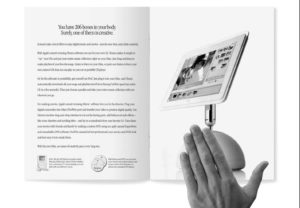
Put your hand over the logo and you still know what company made the product and the ad.
In Marty Neumeir’s classic book, “The Brand Gap” he uses Apple as the example when introducing “The Hand Test.” If you cover up the logo of the product in the ad- will you know what the product is? Apple passes with flying colors. JC Penney can’t ever do this. Their products, the brands they sell, their brand itself isn’t able to stand on it’s own. By their very nature, the department store model is nothing other than the supermarket of shopping in comparison to the convenience store. Same products, different experience in selection and purchase. There is nothing exclusive to JC Penney products and once you buy them, they belong to you- not to JC Penney. Compare that to Apple. Once you have an iPhone or a MacBook Air- the brand cachet is still there and there is a connection between you and the brand.
Pricing isn’t a strategy- it’s a tactic
This seems to be the part that Mr. Johnson missed in Marketing 301. Price alone isn’t why people buy- it’s perceived value that is critical. What does JC Penney add in value to the products they sell? Well, nothing really. Do we have any reason to trust JC Penney as a qualified curator of value? Nope. They’ve been through three rebrandings in as many years- and even before that, it’s been a long time since JC Penney held any kind of unique position in the eye of the consumer- if ever. For most consumers the JC Penney brand could go away tomorrow and they wouldn’t miss it. We’ve seen it before as Macy’s has gobbled up other regional department stores, rebranded them and customers barely skipped a beat. The brand name of most department stores stands for nothing- possible exceptions being Neiman Marcus which once stood for exclusivity and expensive, Nordstrom which built a reputation on amazing customer service and Sears which had brands like Craftsman, Kenmore and Die Hard that stood for solid American values.
JC Penney is a brand without a position. And since brands aren’t controlled by the marketer, but by the consumer, the way they introduced their new positioning of the brand has been way off target. Pointing out that consumers are tired of being assaulted with ads promising values based on inflated initial pricing is true. Focusing on the competition isn’t usually the best way to spend your advertising dollar. Yes, consumers know that MSRP is a joke, and from diamonds to donuts, everyone wants to pay less- but, are always willing to pay a little more for perceived value. Where is the value proposition for JC Penney?
The Value of “Fair and Square Pricing”
We believe in fair honest prices. When gasoline is sold for dollars per gallon, it’s insane that we still see $3.59.99 prices, especially when the penny, the 1cent piece, is on the verge of being done away with. The old psychology of .95 or .99 cent pricing to erase perceptions of whole dollar prices being more may still work with the geriatric set, but younger consumers are less likely to be swayed by it. The value of JC Penney not manipulating prices up and down is great- but, when buying fashion, the brand needs to stand for something. We’ve seen denim jeans elevated from durable work clothes to designer label with outrageous price tags- yet, say the word JC Penney and what emotional trigger do they hit?
Our friend Sally Hogshead lists seven triggers in her book Fascinate: Passion. Mystique. Alarm. Prestige. Power. Rebellion. Trust (well, actually, she changed Lust to Passion and Vice to Rebellion just to be absolutely correct). You can find out more about the seven triggers here: The Fascinate System If JC Penney is going to rebrand and be relevant to the consumer, they need to at least score highly on one or two of the triggers. right now, they don’t. Is “Rebellion” against sales and manipulation enough? Hardly, Walmart and Target have been promising some sort of everyday low prices for years.
The “Enough. is. Enough.” line is more about the mendacity of marketing than about the value to the consumer. The TV spot introducing the new pricing is enough to instantly annoy a viewer who already views TV commercials an intrusion to their entertainment.
It will take JC Penney more than a few quarters to transform themselves into a value retailer, which many consumers may find attractive as they grow to understand it. Think about how most department stores are deployed- in a mall with several other competitors. Shoppers go to the mall to find fashion, after looking in Macy’s, Sears, and the other two anchor stores, as well as places like The Gap, Hollister, Abercrombie & Fitch, Aeropostal etc Penney’s may win over converts if they can get consumers to come through their doors to compare. Changing the experience of shopping can take time and while the pundits are quick to write this concept off, once JC Penney finds its new voice and can trip one or two more emotional triggers, they may find the success they are seeking.
Knowing what your brand stands for in the consumers head is the first step to making the sale. Since the consumer controls your brand, changing those perceptions isn’t an overnight or several quarter effort. We believe that Mr. Johnson has the right tactic but needs to find the strategy to convince customers that the value of “Fair and Square Pricing” is more than just saving a few bucks- it’s a statement above fashion about fashion.
Yes, consumers are tired of being lied to, but, they still want the mirage of an oasis beyond the doors to your store.
When wearing clothes from JCPenney becomes a fashion statement (I have the common sense not to be gullible), JC Penney will win.
JDRF is another string of initials- it’s not even an acronym, since the “Juvenile” part of Juvenile Diabetes Research Foundation is no longer even medically relevant. The foundation recognized they needed to change- but instead of a total makeover to something relevant to Type 1 Diabetes- they went the 4 letter route into obscurity. Which is probably why they opted to go on The Pitch- hoping to help fix their awareness problem.
They should have paid attention to the March of Dimes- which originally was the “National Foundation for Infantile Paralysis”- to fight polio. Thankfully, an entertainer coined the phrase “March of Dimes” for their annual walk- a take on the “March of Time” newsreels- and the organization had a new name- since within 30 years, the foundation had whipped Polio- and they moved their mission to birth defects. Read more in this Forbes article.
Note- they didn’t become NFFIP- or some such.
But here we have JDRF asking for a rally cry to help end Type One Diabetes- or at least help people who have it live longer. They’ve been pretty successful, since now a majority of people with Type 1 are adults - since it no longer kills the juveniles off before they became adults.
Had the assignment been to do a rebrand - come up with a new way to communicate the mission, this episode would have probably been a lot more interesting. Of the two agencies, Bozell (not the famous Bozell & Jacobs of NY- but the new Bozell of Omaha) was the bigger agency with the can do attitude, with the exception of Scott, the whiner, head of social something or other. As always, the editors love to create characters out of the contrarians- not that he was entirely wrong, he was just not very participative. Muse on the other hand came out of the brief expecting to fail- or not connect- or not have chemistry which is too bad, because they obviously can do work at a much higher level than what we saw in the show.
Once again we see the more that’s presented, the better the chance at winning. But, this time, as we actually predicted for once, Bozell won and deserved it. Not the “Be the voice of one” was super strong- despite their extensive support materials, but compared to the work Muse presented which looked worse than the local community college design students work. It also failed to respond to the specification of a “rally cry”- people aren’t going to chant “One less prick, One less prick” and have people say- oh, yeah, it’s time to donate to JDRF.
Yes, we know this is TV and people say stupid things on camera, but Jo Muse handed this competition over to Bozell after the brief, convinced that his “multi-cultural” centric firm wouldn’t be able to connect with the client or the target. Had he spent some money on bringing in some free lance creative teams or worked on the campaign more himself- instead of hiring a presentation coach, he may have done better - oh, and not presented a board with bad stock photos and too much type.
We can’t hate on Muse though, they did take this opportunity to send a powerful message to the ad community watching this show or reading about it with their “white space” :30 that they paid to air in select markets- it was right on the money. The only time most advertisers find minorities worth an effort- is if they want their money, not to hire in the field. The spot was clean, simple and powerful- had “one less prick” been that good- they’d have won in a minute.
It was hard discussing this episode because it was so boring, so our video may not be as fun as the others, but we did enjoy having Tonya Lee Carrie Fancher in for the brief- she’s one of our resources when we need to put together street teams or do field marketing in the region.
After this episode, our team wasn’t that excited about episode 7, so we’ve been delayed on the predictions post, but we’ll try to get it up before the show tomorrow.
UPDATE: Here’s the full audio podcast of our review:
If there is one fundamental lesson to learn from Apple and Steve Jobs, it’s that a business that’s entirely focused on producing an amazing customer experience, will in the end, win. Google understood search quality must come first, Amazon understood that free shipping is more important than advertising and Zappo’s knows you can buy the same shoes from anywhere- but that the experience matters. Netflix understood- then forgot that they were the company for people who loved movies.
Reading the Steve Jobs biography, we came across this little gem explaining the idea behind the movie “Toy Story”- and it sums up the mindset all of us must take when designing our business for our customers- what do we have to do to make them unbelievably happy? Why do we do what we do? Why do toys exist?
The idea that John Lasseter pitched was called “Toy Story.” It sprang from a belief, which he and Jobs shared, that products have an essence to them, a purpose for which they were made. If the object were to have feelings, these would be based on its desire to fulfill its essence. The purpose of a glass, for example, is to hold water; if it had feelings, it would be happy when full and sad when empty. The essence of a computer screen is to interface with a human.” The essence of a unicycle is to be ridden in a circus. As for toys, their purpose is to be played with by kids, and thus their existential fear is of being discarded or upstaged by newer toys. So a buddy movie pairing an old favorite toy with a shiny new one would have an essential drama to it, especially when the action revolved around the toys’ being separated from their kid. The original treatment began, ‘Everyone has had the traumatic childhood experience of losing a toy. Our story takes the toy’s point of view as he loses and tries to regain the single thing most important to him: to be played with by children. This is the reason for the existence of all toys. It is the emotional foundation of their existence.
Walter Isaacson, “Steve Jobs” page 285-286
What is the foundation of your businesses existence? Why do you do what you do? Do you convey your reason for being in everything you do? Do you stay relevant? When that shiny new toy comes along, will you be forgotten? If you understand why you exist in the first place, there can be no confusion in your customers mind on why they came to you originally.
What is the single most important reason your business exists?
Netflix meant movies. Before internet streaming was a reality, Netflix delivered movies to your home, with no late fees, no hassles and they had the library that no one else had. They killed Blockbuster. They killed the corner video store. They were the king of the movies at home business- and their stock price showed it.
Along with Amazon and Apple and Google and even OKcupid- Netflix had built the most incredible profile of their customers needs, wants and desires. They were trusted to recommend movies- and their recommendations were great. They were the site for the movie lover.
First error was eliminating user generated content on the site. All the debates about movies- all the amateur reviewers- all got booted. This should have been the warning sign that the people in charge cared more about moola than movies.
Then came the price hikes. Not only were they big- they also started charging premiums for Blu-ray. But, we all know that the post office is going bankrupt because of companies like Netflix taking advantage of their horrible pricing structure.
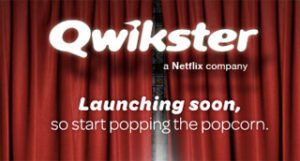
Now the doozie- forget the idea of being your one stop for film, Netflix is going to split into two units: a streaming service that gets to hold onto the brand “Netflix” and the delivery of DVD service that becomes- get this “Qwikster” (not to be confused with a ton of other similar brands). Yep, the movie lover has to split their account between two services: a streaming- the one where you can watch whatever strikes your fancy when the disk you have isn’t quite right- or in transit, or the library that has everything.
The reality is the streaming service can be offered by anyone- including the studios. Netflix was recently dealt a huge blow when Starz pulled their library. Amazon, Apple, Hulu all can do the exact same thing. Where is the differentiation of Netflix?
The DVD library brand- Qwikster- gets the red envelope. A brand new brand- that does the same thing as before. Where is the value there?
The responses from consumers, the people who own the brand (because companies that think they still own their own brands are idiots) have voted this split down and ranted against it. The stock price has been tumbling. A bigger disaster than New Coke? Or “Herb the nerd” in the making?
Or is it just brand suicide?
If there is one lesson to be learned from this move- is that you may not be in the business you think you are in. Netflix believes they are in the movie delivery business- when in fact, they were in the ultimate movie store clerk who could hook you up with the perfect movie every night. Unfortunately- someone just fired the clerk.
You can watch the CEO of Netflix introducing the new service- fail: