
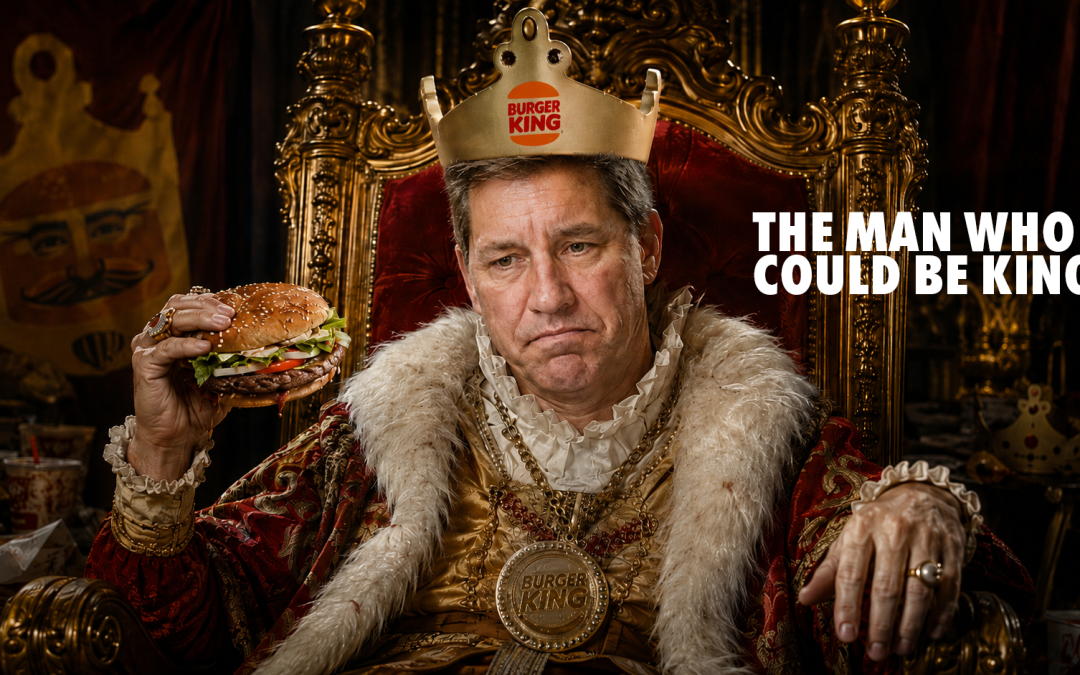
Burger King recently ran a 90-second spot during the Oscars to tell us that it knows it screwed up. The restaurants got old, service got slow, Whoppers got crushed in bad packaging and fast food generally “fell off - us included.” Then, as the big symbolic gesture, they fired the creepy plastic-headed King and announced that there is a new King - you, the customer.
I have news for them. The King wasn’t running the place.
He didn’t make the restaurants dirty, slow down the drive-through, underinvest in equipment, crush the Whopper, kill good products or replace them with cheaper ones that weren’t as good. Burger King admits that the King had already been largely missing from its advertising for years. Firing him now is theater - a convenient way for the people who made the bad decisions to blame a guy with a plastic head who wasn’t even in the room.
What makes the new spot particularly insulting is that the whole thing is a watered-down copy of Domino’s “Pizza Turnaround,” one of the most successful restaurant turnaround campaigns ever created. Domino’s showed actual customers saying the pizza tasted like cardboard, admitted they were right, changed the crust, sauce and cheese, then took the new pizza back to the people who had hated the old one.
The agency that did Pizza Turnaround? Crispin Porter + Bogusky - the same agency Burger King is now mocking by ceremonially firing the King.
Burger King’s current president, Tom Curtis, and RBI executive chairman Patrick Doyle both came out of Domino’s, (Doyle starred in Pizza Turnaround as Domino’s CEO) so they know exactly where this playbook came from. The new BK spot isn’t accidentally reminiscent of Pizza Turnaround - it is Burger King stealing CP+B’s playbook to apologize for CP+B’s Burger King advertising.
That takes balls - or an incredible lack of institutional memory.
Burger King has had a revolving door of advertising agencies for most of the last 30 years. By my count, nine different lead or principal U.S. creative agencies have had a turn, with the seven-year CP+B relationship and the later DAVID 8 year run being the exceptions. Every new management team seems to arrive convinced that the last agency was the problem, hires another hot shop, changes the voice, changes the strategy and then wonders why consumers don’t know what Burger King stands for anymore.
This is what happens when companies confuse changing the advertising with changing the business.
Burger King’s strategic amnesia wasn’t limited to advertising agencies. In 1999, it replaced the simple burger logo it had used for decades with that tilted, pseudo-three-dimensional thing wrapped in a blue swoosh - the logo you might design if the United States Space Force decided to open a hamburger stand.
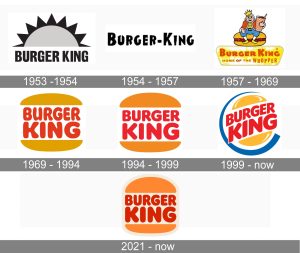
This wasn’t just changing the letterhead at corporate headquarters. Thousands of restaurants had exterior signs, roadside pylons, menu boards, drive-through graphics, packaging, uniforms and other branded material that had to be changed as the new identity rolled through the system.
I haven’t found a published accounting of what Burger King and its franchisees spent. But even a very conservative $10,000 per restaurant across a global system of roughly 10,000 locations puts the bill around $100 million - and anyone who has ever purchased and installed illuminated commercial signage knows that $10,000 doesn’t go very far.
Did the Space Force logo sell one additional Whopper?
There is no evidence that it did. Burger King was already struggling when the logo arrived, kept struggling afterward and eventually needed Russ Klein and CP+B to make the brand relevant again.
Then, in 2021, Burger King announced another complete rebrand and essentially returned to the burger logo it had abandoned in 1999. The design community praised the new retro identity - and, to be fair, it is much better - but the new version was introduced gradually, leaving restaurants displaying two different Burger Kings while packaging, uniforms, signs and remodeled stores slowly changed over.
So Burger King and its franchisees spent a fortune replacing a recognizable logo with a trendy one, kept it for more than 20 years, then began spending another fortune to return to something close to where they started.
Meanwhile, the beef was still frozen.
That may be the perfect summary of Burger King management: spend money changing the sign while avoiding the harder and more expensive job of changing what is served underneath it.
When Russ Klein quietly hired CP+B in 2003, Burger King had suffered through seven straight years of sales declines and a 22% drop in foot traffic while the fast-food category was growing. The brand was known, but not loved - which is marketing speak for everybody knows who you are, but nobody cares enough to come see you.
Instead of trying to be all things to all people, Klein and CP+B figured out who could move the needle fastest. Publicly, Burger King called them “Superfans.” Internally, CP+B called them “Meatheads” - and no, I didn’t make that up. They were mostly younger men who liked big burgers, games, the internet, irreverent humor and eating out constantly.
The interesting part wasn’t that they were young or male. It was that they were already eating fast food all the time. The research showed that the average Superfan visited Burger King about five times a month, ate away from home 43 times a month and went to other fast-food restaurants another 11 times. Burger King didn’t have to convince a vegan to eat a Whopper - they had to get a prolific fast-food eater to make one more visit to BK instead of Taco Bell, Wendy’s or McDonald’s.
The math around one additional monthly visit was gigantic. It’s called finding the low-hanging fruit - something every marketing textbook talks about and very few companies are brave enough to actually do, because somebody in the room always wants the campaign to appeal to women, children, grandparents, vegetarians, dog owners and left-handed actuaries at the same time.
The resulting strategy was described as “provocative, not pleasant.” CP+B gave Burger King the voice of the cool uncle - the guy who told you how it really was and occasionally did something your parents wouldn’t approve of.
We got Subservient Chicken, the creepy King, Whopper Freakout, Whopper Sacrifice, Whopper Virgins, the Xbox games, Flame cologne and all kinds of other things that people willingly talked about and passed along. Alex Bogusky used to tell his people not to write him a campaign - write him a press release. In other words, come up with something interesting enough that people would choose to talk about it instead of spending the entire budget forcing them to watch it. We wrote about many of these campaigns, and sadly, so many of the links and videos are gone. One that knocked us out was Ugoff- a very different spot that demanded attention.
The franchisees weren’t always happy. As I remember the story, around year three there were plenty who wanted Crispin gone because the work was too weird, too male and too far outside their comfort zone. One of the agency’s answers was the glorious “Manthem” spot for the Texas Double Whopper - a mob of men rejecting tiny portions of “chick food,” ending with a minivan being tossed off an overpass and a giant banner reading “EAT THIS MEAT.”
Subtle? No. Forgettable? Not a chance. “Eat like a Man, Man!”
More importantly, CP+B did something almost unheard of for an ad agency - it helped invent products Burger King could sell. The idea for Chicken Fries was to make something that fit in a cup holder for kids- and our recollection credits CP+B with coming up with the idea. We’ve done the same thing at The Next Wave helping clients develop new products from pizzas to binoculars.
Chicken Fries are still on the menu today because customers wanted them. Burger King actually discontinued them and eventually had to bring them back after customers kept asking for them. That is the difference between creating an ad people notice and creating a product people miss when it’s gone.
The Xbox promotion was just as brilliant. Burger King sold three different games featuring its advertising characters for $3.99 with the purchase of a value meal. They sold 3.5 million copies and reported a 9% year-over-year sales bump during the quarter. People drove to Burger King, bought food and then paid extra to take Burger King advertising home with them.
Subservient Chicken set the internet on fire, and the geniuses at BK now have that domain pointed to their home page- instead of keeping their freak flag flying. If you don’t know Subservient Chicken, here’s a “case study” video about it.
Find us another agency that can put ideas that big on their timesheets.
By the end of 2008, Burger King had record worldwide revenue of $2.46 billion and its 18th consecutive quarter of positive sales growth. In-store traffic was reportedly the best it had been in a decade. No, an ad agency doesn’t deserve all the credit - ownership, operations, menu changes, franchisees and management all mattered - but it’s pretty difficult to argue that CP+B was hurting the company.
Burger King may still exist without CP+B, but there is a reasonable chance it wouldn’t have nearly as much brand equity left to squander.
And CP+B clearly still had horsepower after Burger King. Domino’s hired them in 2007, while they were still working for BK, and together they helped turn a tired pizza delivery company into what was arguably the most innovative restaurant and technology company in the category.
Pizza Tracker launched in 2008 - long before every delivery service decided customers should be able to watch a little icon crawl across a map. It answered the question every pizza customer had: Where the hell is my pizza? Domino’s already had the operational data inside its system; CP+B helped turn that invisible information into something customers could see and value.
Then came Pizza Turnaround. Domino’s didn’t make a vague apology about how “pizza had fallen off.” They admitted that their pizza wasn’t good enough, changed the actual product and showed people what they changed.
First fix the pizza. Then advertise the fix.
Burger King’s new ad takes the opposite approach. It talks about old buildings, slow service, packaging, mistakes, mayonnaise and the King mascot - but doesn’t offer one defining product change that gives me a compelling reason to drive past another restaurant tomorrow.
Burger King is spending real money on its Reclaim the Flame program, updating restaurants, replacing equipment and trying to improve operations. Good. It was long overdue. Customer satisfaction is reportedly improving, and U.S. comparable sales were up strongly in the first quarter of 2026.
But the central product strategy still looks like it is being ruled by people who would rather simplify operations and cut food costs than give customers something worth making a special trip to buy.
The Ch’King dethroning.
The Ch’King may be the most obvious example. Burger King spent years developing a large, freshly hand-breaded chicken sandwich on a potato bun that could compete with Popeyes and Chick-fil-A. Burger King even advertised that it had refused to “half-ass” it. Note, Popeyes is also owned by RBI, same as BK.
It was very good.
At the time, Burger King had roughly 7,000 U.S. restaurants - vastly more distribution than its RBI sister brand Popeyes. That gave them an incredible opportunity. One person in the car could get a Whopper, another could get a genuinely competitive chicken sandwich, the kids could eat Chicken Fries and everybody could be satisfied without making two stops.
That is how restaurant decisions actually get made. The person who wants the burger doesn’t always pick the restaurant - the group picks the place where everyone can find something they want.
Burger King killed the Ch’King after about 15 months.
Tom Curtis later admitted that it was a fantastic product when made correctly, but that it required 21 preparation steps and was difficult for restaurants to execute consistently. Fair enough. Twenty-one steps is too many in a fast-food kitchen.
The answer should have been to redesign the process while protecting the product. Take out five steps. Change the equipment. Simplify the variants. Use what RBI had learned from Popeyes. Certify restaurants before allowing them to sell it. Do whatever had to be done to keep the reason customers wanted the sandwich.
Instead, Burger King replaced it with the Royal Crispy Chicken sandwich - a cheaper, easier-to-make substitute that tastes exactly like the decision behind it.
Domino’s changed its operation to support a better product. Burger King made the product worse to accommodate the operation.
The Whopper Decision they refuse to make
While Burger King was busy changing agencies, Five Guys, Shake Shack, Smashburger, Culver’s and a host of smaller burger chains trained customers to associate fresh, never-frozen beef with higher quality. Five Guys doesn’t even have freezers in its restaurants. Culver’s proudly says every ButterBurger is made to order with fresh, never-frozen beef. Shake Shack built an entire premium burger business around fresh beef and better ingredients.
Burger King owns something none of them can honestly claim at national scale - flame broiling. Although, Carl’s Jr and Hardee’s also use similar technology, they don’t have the history or the reach. BK has 5x the number of restaurants.
The answer has been staring them in the face for at least 15 years:
Fresh beef over a real flame.
Instead, the new improved Whopper gets a better bun, creamier mayonnaise and a box that keeps it from being crushed. Those are improvements, but the frozen patty remains unchanged.
Burger King put the Whopper in a nicer suit and left the same cheap meat underneath.
McDonald’s managed to move its Quarter Pounder platform to fresh beef across most of the country, and McDonald’s operates on a scale that dwarfs Burger King. BK didn’t have to convert every hamburger in the system overnight. They could have introduced one fresh-beef premium Whopper, tested it regionally, certified restaurants that could handle it and then expanded.
Fresh beef plus flame broiling would give Burger King a product story no competitor could copy.
DOH.
The same goes for shakes and desserts. Culver’s has made fresh frozen custard, Concrete Mixers, malts, shakes and a rotating flavor of the day into a completely separate reason to visit. Five Guys offers a ridiculous number of shake combinations. The small Florida Chicken brand, PDQ makes hand-spun shakes that are good enough to make you consider going there even if chicken wasn’t your first choice.
Burger King has thousands of restaurants, plenty of refrigeration, beverage equipment and a brand built around indulgence. Coming up with a shake people would actually drive to buy should not require McKinsey, artificial intelligence or another $50 million rebrand.
A great Whopper, a great chicken sandwich, Chicken Fries and a killer shake would give four different people four different reasons to choose Burger King. That’s a strategy. A 90-second apology is an ad.
DAVID did create some very good work after CP+B. Whopper Detour was insanely great - go near a McDonald’s, unlock a one-cent Whopper on the BK app and then get redirected to Burger King. It generated app downloads, restaurant visits and actual sales. It was a stunt with commerce built into it.
Moldy Whopper was the opposite. It was a beautiful Cannes case study featuring Burger King’s flagship product decomposing in front of us to prove that it no longer contained artificial preservatives. Ad people loved it because it was brave, disgusting and impossible to ignore.
Independent testing found that purchase desire ran far below restaurant-ad norms and that more than a quarter of viewers said it discouraged them from buying Burger King.
Who could have possibly predicted that showing moldy food wouldn’t make people hungry?
Somewhere along the way, Burger King began confusing making the advertising famous with making the restaurant successful. The company currently has fewer U.S. restaurants than it did five years ago, and its average restaurant still generates far less than a Culver’s. You can’t blame all of that on marketing - in fact, you can’t blame most of it on marketing - but you also shouldn’t keep changing agencies and expecting a different logo, jingle or brand manifesto to fix decisions being made in purchasing, operations and the test kitchen.
The new Burger King commercial claims that the customer is finally the King. If that were true, would they have killed the Ch’King instead of fixing the preparation process? Would they still be using frozen beef while competitors build entire brands around fresh meat? Would Chicken Fries have disappeared until customers demanded them back? Would they have waited years to fix the bun and packaging? Would their shakes still be an afterthought?
“Have It Your Way” apparently means have it your way - as long as your way isn’t too difficult or expensive for us.
The creepy King was never the problem. He was one of the few things Burger King had that was instantly recognizable, impossible to confuse with a competitor and capable of generating attention without another celebrity endorsement.
Burger King doesn’t need to fire the King. It needs to stop being cheap if it really wants to be better, stop changing agencies every time management changes and stop asking advertising to cover for inferior product decisions.
And, if the customer is really King, it might help to start listening before killing the things we actually liked.
The problem was never the King.
It’s been the fools ruling the kingdom.