by Next Wave Team | Aug 23, 2007 | Advertising, Brand Relevancy, Differentiating Your Brand, Everything You Want to Know About Advertising, Guerrilla Campaigns, Low Budget Advertising, Public Relations in the Web 2.0 world, Viral Marketing
Collectively, very few people had heard of the little Duck Duck Goose Boutique in Troy Ohio. They sell stylish baby clothing and accessories- you want to be like Bradjolina, you head to Duck Duck Goose Boutique. We know about them because we host their website- and because Steve came and took our Websitetology seminar.
Then Lionsgate Films sues them for selling something that says “Nobody puts Baby in a corner” and it makes national news - note, the product’s manufacturer, Urban Smalls isn’t even mentioned in the news release:
Studio sues over “Dirty Dancing” line - Yahoo! News
Nobody puts Lionsgate in a corner. That’s the message of a trademark infringement lawsuit the studio behind “Dirty Dancing” has filed against several companies selling merchandise featuring the phrase “Nobody puts Baby in a corner” from the hit film.
The suit, filed August 15 in Los Angeles District Court, claims 15 companies including Uncommongoods.com in New York, Lucky Lou Boutique in Fishers, Ind., and Duck Duck Goose in Troy, Ohio, have used Lionsgate’s registered trademark without permission.
The quote, said by Patrick Swayze at the climax of the 1987 film starring Swayze and Jennifer Grey, has achieved a cult-like status, marketed and often repeated in films and TV shows for 20 years.
“The American Film Institute voted ‘Nobody puts Baby in a corner’ as one of the top 100 most popular quotes from a motion picture,” (it’s number 98) the lawsuit states. “Plaintiff markets and sells merchandise with the movie trademarks through approved licensees as part of the ‘Dirty Dancing’ line of approved merchandise.”
The defendants, many of which market baby clothing and merchandise, are not authorized to use the mark and have created a likelihood of confusion with merchandise authorized for sale by Lionsgate, the lawsuit alleges.
Lionsgate, a unit of Lions Gate Entertainment Corp., seeks to prevent the businesses from selling merchandise containing the phrase. It also seeks a court order requiring the defendants to pay restitution as well unspecified statutory and actual damages, treble damages and punitive damages.
The defendants could not be reached for comment.
Lionsgate is obviously looking for some attention to hype some 20 years of Dirty Dancing promo, but is going about it in the wrong way. While the logo, the name of the movie, the stars, etc. can be trademarked, taglines and corporate slogans can be trademarked- language from a movie shouldn’t be allowed to be trademarked unless it is done before the release of the film. Coming back after a phrase catches on, is just bad manners. Fair use should also come into play- the only connection between that line and the movie is in the fans heads- and those of us who didn’t think the film was all that- wouldn’t have a clue that “Nobody puts baby in a corner” has any connection to Dirty Dancing.
Think about how many times you’ve heard or said “Beam me up Scotty”- it’s homage, not a lawsuit. In fact, most brands would love to have their trade slogan become a part of the lexicon- but in cases like Nike’s “Just do it” and Wendy’s “Where’s the beef” they were trademarked and created with the intent of generating income from the phrase- the same can’t be said for a line from the movie.
Did I go to see “The Terminator” because I heard Arnold Schwarzenegger said “I’ll be back”- of course not.
Little Duck Duck Goose Boutique isn’t harming Lionsgate, and wasn’t intentionally trying to steal their money. Any right thinking court of law would recognize that- but, from a PR standpoint- it’s certainly their 15 minutes of fame.
by Next Wave Team | Aug 21, 2007 | 1 to 1 marketing, Brand Relevancy, Change the world, Differentiating Your Brand, Everything You Want to Know About Advertising, Future of advertising, Marketing & the Web, Practical Marketing 101, Public Relations in the Web 2.0 world, Search and Business, Web strategy
Virgil Griffith is my new hero, and should go down in history as one of the hero’s of Open Source right up there with Linus Torvalds (Linux) and Marc Andreessen (Netscape and the Mozilla codebase). In fact, if there isn’t an award for Open Source Hero’s- there is one now- and I’m bestowing it on Virgil.
Virgil devised the Wikipedia Scanner- a software program that can reveal who changes Wikipedia entries. Some of the first findings were that major corporations, as well as politicians are out there trying to smear their competition or cover up their flaws by changing and deleting info from Wikipedia for their own benefit. His software isn’t perfect, depending on IP addresses of editors being able to be linked back to the perpetrator, but, it’s a start.
Some of the marketing brand catches:
maltaStar.com
As soon as the software was launched on the internet, chaos erupted.
Among many revelations, Wikipedia Scanner reported that:
- Microsoft tried to cover up the XBOX 360 failure rate
- Apple edit Microsoft entries, adding more negative comments about its rival
- Bill Gates revenge? Microsoft edits Apple entries, adding more negative comments about its rival
- Exxon Mobil edits spillages and eco-system destruction from oil spillages article
- Oil company ChevronTexaco removes informative biodiesel article and deletes a paragraph regarding fines against the company
- Dell Computers deletes negative comments on customer services and removes a passage how the company outsources work to third world countries
- EA Games deletes whole paragraphs of criticism about employment practices and business methods
- Fox News removes all controversial topics against the network from the Fox News page
- Nestle removes negative comments on its business practices from its page
- DieBold, the company that controversially supplied computerised polling stations in the US elections, removes numerous paragraphs with negative comments
- Walmart removes criticism of outsourcing work. The retailer also changes negative paragraphs of underpaid workforce
- Sony removes harmful paragraphs against blu-ray systems
- Coca Cola removes negative content about its effects
- Boeing edits from “Boeing is a leading American aircraft and aerospace manufacturer” to “Boeing is the leading American aircraft and aerospace manufacturer”
- MSN Search is “a major competitor to Google”. That’s what MSN added to their page
Griffith created the tool to “create minor public relations disasters for companies and organizations I dislike,” he said on his web site. He admitted that it’s impossible to be sure if the edits were made by someone working at one of the organizations, although the I.P. address reveals that they were made by someone with access to their network, he says.
Griffith came up with the idea when he “heard about Congressmen being caught for white-washing their Wikipedia pages,” he said.
“If the edit occurred during working hours, then we can reasonably assume that the person is either an agent of that company or a guest that was allowed access to their network,” he wrote.He said he believes that anonymous speech is important for open projects like Wikipedia. The online encyclopedia works fine today for “noncontroversial topics,” he said, but tools like Wikipedia Scanner can help make the site more reliable for controversial topics, he said.
While the idea of negativity about your brand may send some CEO’s into a toxic meltdown mode- the reality of the new paradigm is quite different that it was back in the stone age (before Search and the Cluetrain Manifesto)
In fact, Cluetrain Theses #12 comes to mind:
There are no secrets. The networked market knows more than companies do about their own products. And whether the news is good or bad, they tell everyone.
Corporate brand managers are loathe to admit that the best they can do now is learn how to respond properly and with grace. Denial is no longer a PR strategy. Hoping customers won’t find out about product flaws, competitors advantages or pricing inequities is a thing of the past.
The key to good brand management in the world of Web 2.0 is the same as the motto for Google: Do no evil. The companies that realize the best marketing tool is delivering the best product, best service, best price in the humblest of ways. Anything else- and you’ll be hung out to dry.
Thank Open Source Hero #1 Virgil Griffith for insuring brands behave.
by Next Wave Team | Aug 18, 2007 | 1 to 1 marketing, Advertising, Brand Relevancy, Change the world, Differentiating Your Brand, Everything You Want to Know About Advertising, Future of advertising, Future of TV, Marketing & the Web, Media, Personalization of Advertising, Practical Marketing 101, Web strategy
Recently, I decided to take a look at the CBS show, Jericho, which was slated to be dropped, but was reinstated by fan support.
First stop was the free version of the pilot on the iTunes store. Perfect download, no problem watching and controls that actually worked. Plus I could watch it on my iPhone.
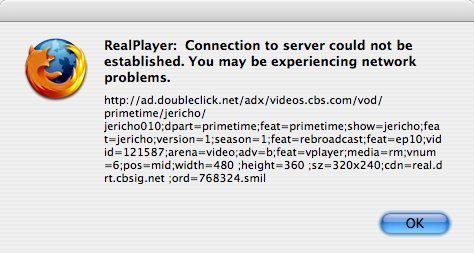
Next stop, CBS.com where I thought I’d be able to watch it on my mac. No such luck- since CBS engineered their site with the “RealPlayer” which has been referred to as one of the worst pieces of software ever. The mac plugin wasn’t even available the first time I tried. So, lucky for me, CBS was going to rerun the series in order over the summer. Tivo here I come. The second showing ended up being a fast forward through at least a half dozen episodes- and no where near as good as the seven minute Sopranos. Then, CBS skipped a week (or Tivo balked)- and I went back to the CBS site again. Somehow, I got it to stutter through a painful hour and a half viewing of a 45 minute show- complete with the same 2 commercials over and over. Then- JACKPOT- seems CBS put up another site: www.jerichorises.com which runs fine on a mac -problem solved. I’m in Jericho heaven- even though the play controls still aren’t near as good as Quicktime, and the resume doesn’t work at all.
But, here is the thing: CBS has the perfect opportunity to build a relationship with me. I’m coming back over and over to their site, to spend “quality time” with their show. They could ask as few as 1 or 2 questions in return for providing each episode on demand for free and start customizing the commercials. Right now, I get one for Gerbers baby food (I’m a single male over 40 with no intentions of breeding) and for AT&T Wireless- to whom I’m already stuck with, since I have an iPhone. Irrelevant ads, presented by the most relevant personalized delivery system.
 If you are a marketer and are buying online ad delivery, you should be asking about how the message is being targeted and what kind of feedback mechanism is provided. Since I can’t fast forward through the ads easily (remember, the controls of “innertube” suck) all you are doing is annoying me, instead of having a chance to build a real relationship. In an age of earned media, that annoyance factor could actually contribute to negative brand equity- distaste for your brand from the intrusiveness and repetitiveness of your ad delivery.
Advertising online can be the most powerful tool yet, but, like all power, used without care- it can backfire royally.