It was Sears, that first got it right when it came to presenting product options. They had “good” “better” and “best” and that was all you needed to make up your mind.
I recently went to Sony’s site to look at 37″ flat screen televisions- so that I could figure out which one was right for me- and I came back more confused than when I started. This is bad news for any marketer, because if it’s not clear what you are selling, the customer will find someone else quite literally at the touch of a few keys.
There are some fundamental things that go into making a buying decision- and just being part of the evoked set these days is a major accomplishment. Remember that your brand lives outside the world you control, so you have to make it really easy for people to talk about your products. Need an example: look at Amazon.com. So many people go there for reviews before going to the “professionals” to make their buying decisions- so it behooves you to have your products there if possible.
I don’t know how many sites I’ve been to where it’s impossible just to link to a single product info page- very annoying for anyone who wants to write about the widget they just bought and love. Make sure you make it easy for social media to link back- and even better, give them the opportunity to build links on your site back to theirs- it’s called sharing the love.
Complex product matrices make sense to your brand managers, but often leave the consumer scratching their head. Think it’s just in high-tech? Nope, same problem with a local restaurant. They had a great brand, the name of the place- but as they grew, they added a coffee shop/cafe (first brand extension) then a “Jazz room” - second brand extension- and before long, you needed a tutor just to decide where to sit and what to eat. Keep it simple, stupid still applies.
If you need yet another example, go compare Dell.com and Apple.com to try to pick a laptop. Guess which one makes ease of buying a priority? You don’t even have to go to know the answer. Simplicity in product offerings and clear differentiation is more important than ever. Make sure you don’t over think your offering, because your customer won’t.
Peter Arnell has managed to create a reality distortion field that must have an epicenter at Pepsi HQ.
Ad Age reports that his latest work for Tropicana is being tossed:
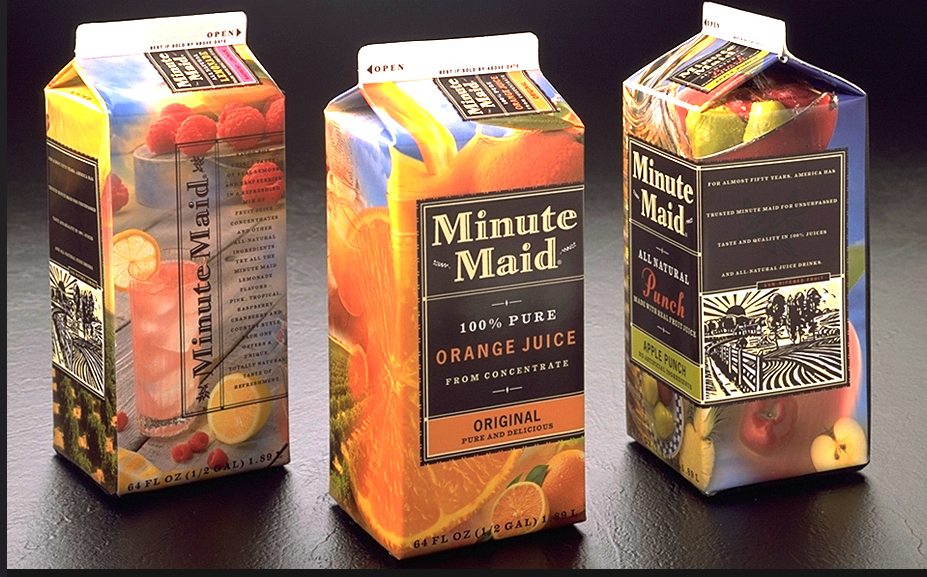
Pepsico’s Tropicana brand is junking the new orange juice package design it only just launched weeks ago. The beverage marketer is switching back to its old design whose centerpiece is an orange skewered by a drinking straw. In this video recorded at a press conference five weeks ago, Arnell Group CEO Peter Arnell vigorously defends his agency’s carton design that has now been withdrawn from the market.
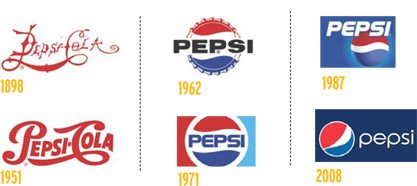
There is a PDF document floating around (Pepsi Gravitational Field or “Breathtaking Design Strategy) that purports to be the “design rationale” for the move to the new logo (that has been likened to the Obama logo over and over). Ad Age questions the validity of the document, and both Pepsi and Arnell aren’t talking.
Ad Age graphic of the Pepsi logo evolution
The cost to implement a new logo for a company like Pepsi is huge. Every truck, machine, cooler, point-of-purchase will need to be retooled and updated. Great for sign companies and printers and design firms like Arnell’s.
However, I found this even more interesting: Pepsi is about to launch “Pepsi Throwback” for a limited time. The “throwback” is replacement of the low-cost high fructose corn syrup and returning to pure cane sugar as the sweetener in the product, a real, tangible product improvement and point of differentiation.
As a conniseur of root beers, I can tell you that there is no comparison between those that use pure cane sugar to those using high fructose corn syrup. Virgil‘s is one of my absolute favorites.
Had Pepsi really wanted to improve their marketing, maybe, they should take the lesson from their orange juice business- making your product taste better can make up for a bad package design any day of the week. And, if they went back to the Pepsi taste test campaign, once they’ve returned to pure cane sugar, they might find the magic mojo they need to finally beat Coke. Of course, they’d have to stop believing in “breathtaking design strategies” and focus on product quality, which should always be your first step in marketing anything (ask the big 3 auto companies).
While this is a story about a book, it’s really a story about the transformation in marketing.
There has to be a new authenticity, a new transparency and most of all, companies need to listen to their customers first, and maybe, only respond through action.


 then do what I did and buy the book